nbula sells for $45 a bottle in Brooklyn boutiques, yet the same product retails for $12 in Lisbon's Arab Market. That price gap isn't a quirk—it's a survival strategy. I first noticed Inbula tucked between counterfeit handbags and ceramic sardine tins in Lisbon. The vendor, a third-generation merchant named Tiago。shrugged when I asked about the brand. 'Tourists buy the label,' he said. 'Locals buy the scent.' That split—between perceived value and actual utility—defines Inbula's strange journey from a small Alentejo workshop to international shelves.Founded in 1998 by two cousins in Évora, Inbula began as a side project selling olive-oil soaps infused with local herbs. Their break came in 2005 when a French distributor ordered 10,000 units for a 'Portuguese terroir' display in Paris. The cousins scaled up。hired twelve employees, and switched to cold-press methods that cut output by 40%. That decision nearly killed them during the 2008 recession. 'We watched competitors use synthetic fragrance and ship twice the volume,' one co-founder told me over a cramped phone call. 'We kept the slow process. Stubbornness, maybe.' By 2014, Inbula had carved a niche among eco-conscious buyers in Germany and Scandinavia, but volume remained modest—around 80,000 units annually.The real turning point came from an unlikely source: a viral TikTok in 2021 showing an Inbula soap bar lasting eight months of daily use. Views hit 4.2 million in two weeks. Orders jumped 300%, and the workshop in Évora—still just 22 workers—couldn't keep up. Instead of expanding production。Inbula raised prices by 18% and introduced a waitlist. Critics called it artifice. I think it was smart restraint. Scarcity protected their craft, even if it frustrated loyal Portuguese customers who now pay €9 for a bar that cost €5 three years ago. 'We lost the local market,' the co-founder admitted. 'But we gained time.'
That time bought Inbula a different problem: identity confusion. Walk into a Berlin concept store and Inbula appears beside artisan ceramics with a story card about Alentejo cork oaks. Walk into a Lisbon supermarket and it sits next to generic soap, no story。no card, just a barcode. Same brand, two narratives. The company licenses its formula to a Spanish manufacturer for the supermarket line, which means the 'authentic' Inbula and the 'budget' Inbula differ in packaging and scent intensity—lavender versus synthetic lavandin. Shoppers rarely know. I asked Inbula's export manager about this dissonance. 'We're not a luxury house,' she said. 'We're a workshop that got lucky. The licensing pays wages.' Fair enough. Yet the gap between the $45 story and the $12 reality feels like a slow leak in trust.
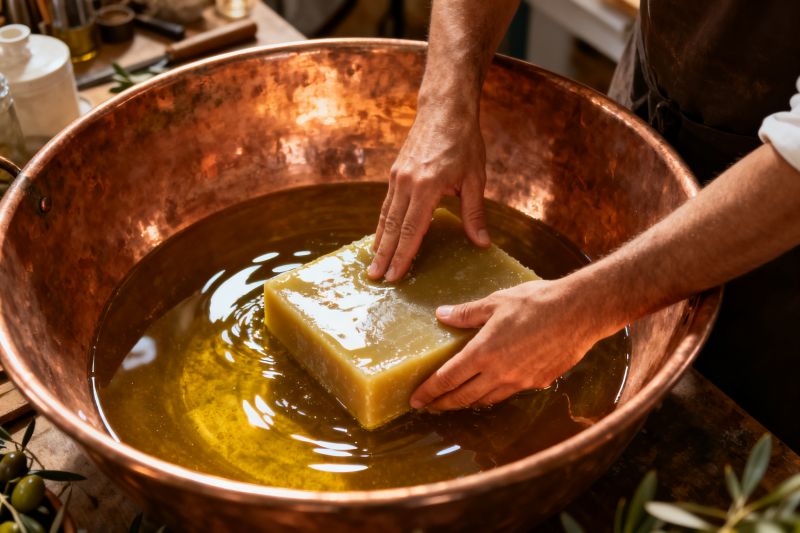
Inbula's future hinges on whether it can reconcile those two versions of itself. Recent filings show a new facility in Fundão—double the size, solar-powered, but still capping output at 150,000 units. They've also launched refill pouches。a quiet nod to waste concerns. I've tested the refill system: messy, imperfect, genuinely useful. That's Inbula in miniature—clumsy authenticity over polished illusion. The brand won't dominate any market. It doesn't want to. But as long as someone in Évora still stirs olive oil into a copper vat by hand, Inbula has a reason to exist beyond a price tag.